Romance of a lucky farmer chapter 209
Gallery

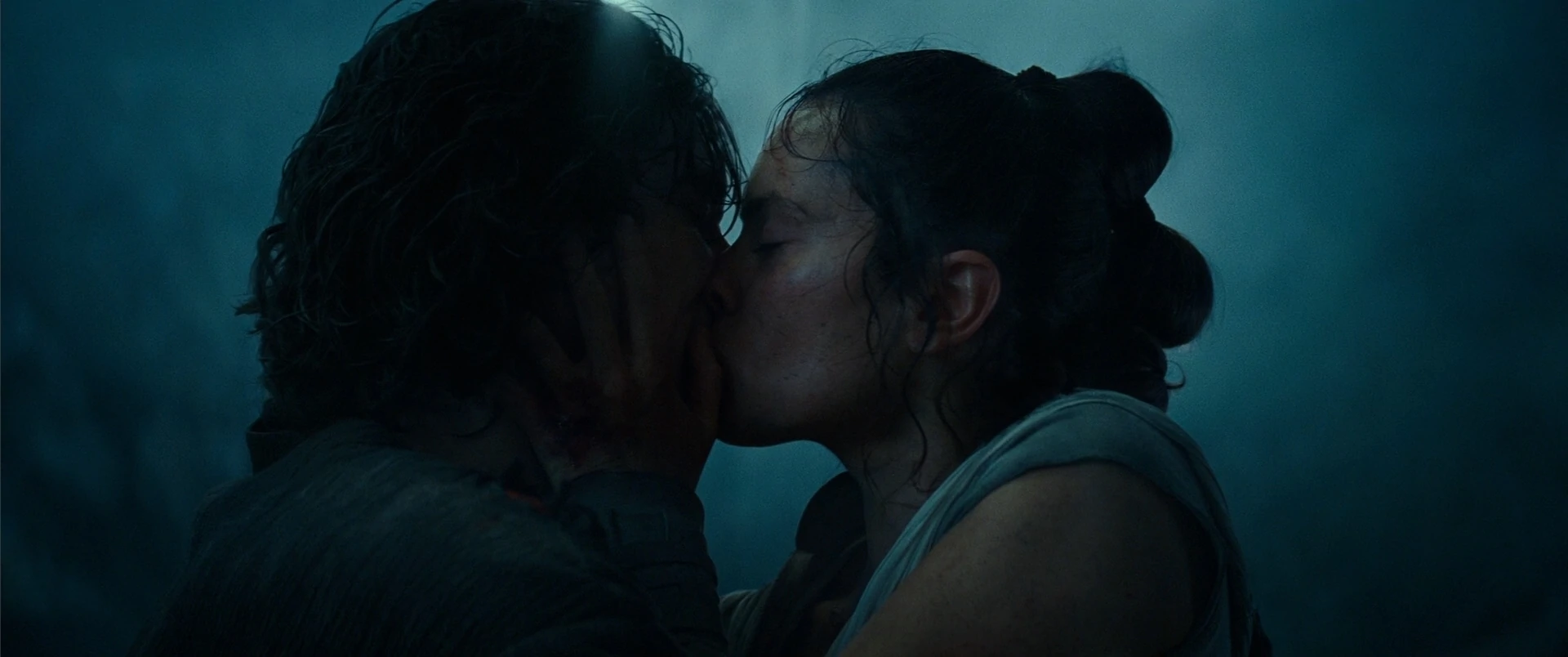
Star Wars: Episode IX The Rise of Skywalker, marketed as Star Wars: The Rise of Skywalker, is a 2019 film directed by J.J. Abrams from a script by Abrams and Chris Terrio. It is the third and final part of the Star Wars sequel trilogy. The film, produced by Lucasfilm president Kathleen Kennedy…
My story is of Balham and of a family dwelling in Balham who were more Welsh than Balhamitish. Strangers to that neighbourhood who go up Harrington Road from the tram must often wonder why the second turning on the right is called Abercorran Street: the few who know Abercorran town itself, the long grey and white street, with a castle at one end, low down by the river mouth, and an old church high up at the other, must be delighted by the memories thus recalled, but they also must wonder at the name. Abercorran Street is straight, flat, symmetrically lined on both sides by four-bedroomed houses in pairs, and it runs at right angles out of Harrington Road into another road which the pair of four-bedroomed houses visible at the corner proclaim to be
When I myself first saw the white lettering on a blue ground of
To-day the jackdaws at least, if ever they fly that way, can probably not distinguish Abercorran Street and Wilderness Street from ordinary streets. For the trees are every one of them gone, and with them the jackdaws. The lilies and carp are no longer in the pond, and there is no pond. I can understand people cutting down trees—it is a trade and brings profit—but not draining a pond in such a garden as the Wilderness and taking all its carp home to fry in the same fat as bloaters, all for the sake of building a house that might just as well have been anywhere else or nowhere at all. I think No. 23 Wilderness Street probably has the honour and misfortune to stand in the pond’s place, but they call it
Ann likes the new houses as well as the old elm-trees, and the hundreds of men, women, and children as well as the jackdaws—which is saying a good deal; for she loved both trees and birds, and I have heard her assert that the birds frequently talked in Welsh as the jackdaws used to do at the castle of Abercorran; but when I asked her why she thought so and what they said, she grew touchy and said: “Well, they did not speak English, whatever, and if it was Welsh, as I think, you cannot expect me to pervert Welsh into English, for I am no scholar.” She is keeping house now for the gentleman at 21 Abercorran Street, a Mr Henry Jones. She would probably have been satisfied with him in any case, since he is the means by which Ann remains alive, free to think her own thoughts and to bake her own bread; to drink tea for breakfast, tea for dinner, tea for tea, tea for supper, and tea in between; to eat also at long intervals a quart of cockles from Abercorran shore, and a baked apple dumpling to follow; and at night to read the Welsh Bible and a Guide to the Antiquities of Abercorran. But Ann is more than satisfied because Mr Jones is Welsh.
Ann will never leave him unless he or she should die. She is untidy; she has never decided what is truth; and she has her own affairs as well as his to manage; but, as he says himself, he has entertained an angel unawares and she is not to be thrust out. He covers his inability to command her by asking what she could do at her age if she had to leave. It is not likely that Mr Henry Jones could get the better of a woman whom—in spite of the fact that she has never decided what is truth—he has called an angel. For he did not use the word as a mere compliment, as much as to say that she was all that a woman should be when she is in domestic service. She is not; she is excellent only at pastry, which Mr Jones believes that he ought never to touch. He has been heard to call her “half angel and half bird”; but neither does this furnish the real explanation, though it offers an obvious one. For Ann is now—I mean that when we were children she seemed as old
An ordinary bird certainly—and an ordinary angel probably—would have pined away at 21 Abercorran Street after having lived at Abercorran House and at Abercorran itself. But Ann is just the same as when I last saw her in Abercorran House. She alone that day was unchanged. The house, the Wilderness, the conservatory, the pigeon-houses, all were changed; I was changed, but not Ann. Yet the family had then newly gone, leaving her alone in the house. It was some years since I had been there. They had been going on as ever in that idle, careless, busy life which required a big country house and an illimitable playground of moor and mountain for a full and fitting display. Gradually their friends grew up, went to a university, to business, or abroad, and acquired preferences which were not easily to be adapted to that sunny,
Thus was there one reason the less for boys who were growing up, ceasing to tear the knees of their trousers and so on, to frequent Abercorran House. I lingered on, but the death of one there had set me painfully free. After a time I used to go chiefly to honour an old
In spite of old Ann and her kitchen fire I did not stay long in the house that day. The removal which had left it deserted and silent had made it also a little sordid: the family’s ways, for example, had not agreed with the wall-paper, and they had been no enemies to spiders. So I went out into the yard. There were no dogs; all had gone with the Morgans to Abercorran. The only life was a single homeless blue pigeon flying about in search of the home which had been sold. Ann said that almost every one of the birds had returned in this way, and she called the traveller into the kitchen to wait until its purchaser came in search of it. She told me who he was, and much more about the sale, which I forgot or never heard, because the sun shone very warmly into the yard just then, and I could not help seeing them all again, Jack and Roland, Lewis and Harry, and Jessie, and Philip, too, as he
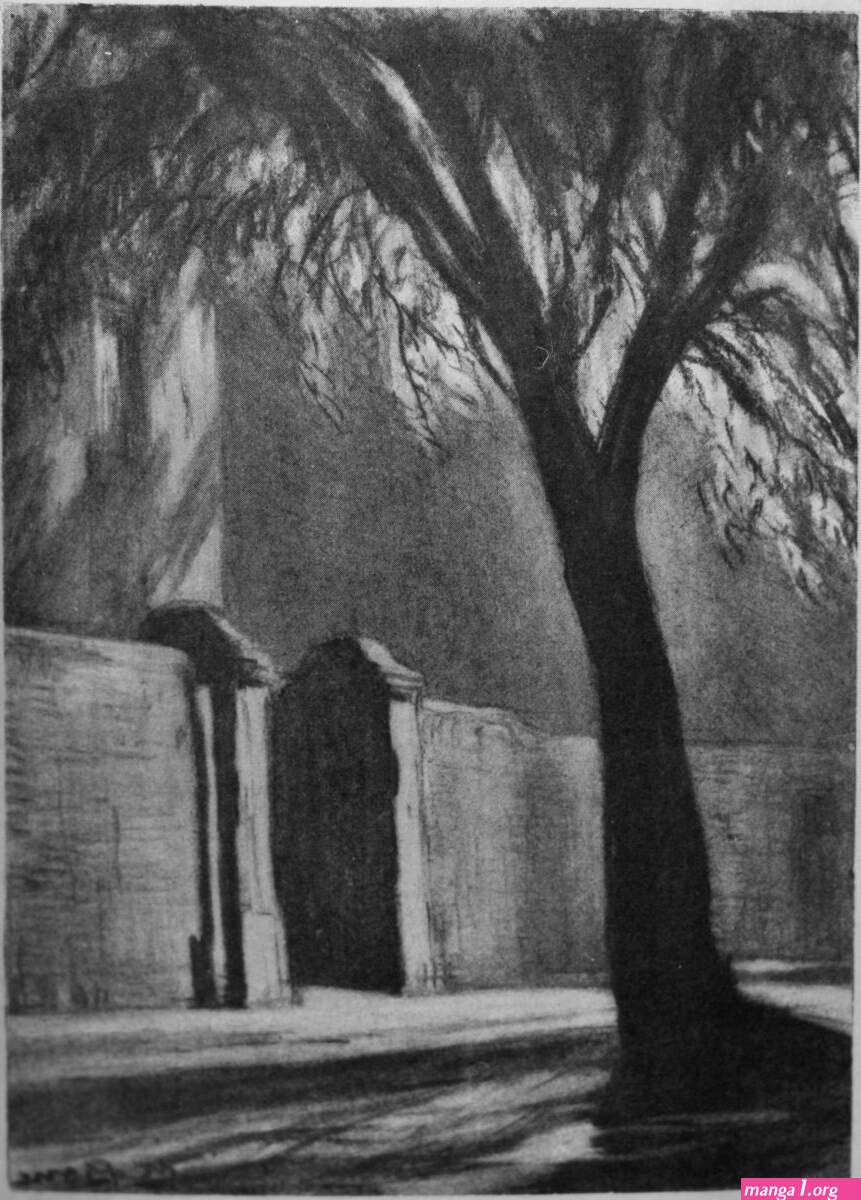
In those days Abercorran House stood at the end of a short, quiet street which had only six houses in it, all on the right-hand side going up, all roomy and respectable, monuments of Albert the Good’s age, well covered with creepers, screened by a continuous line of lime-trees and in most cases by laurel, lilac, and balsam in compact shrubberies. Opposite the houses a high wall ran along until, at Abercorran House, the street was cut short by an oak fence. Behind that fence, and occupying as much ground as all the other houses and gardens together, lay the Abercorran garden, the Wilderness, which was bounded and given its triangular shape by a main road—now Harrington Road—and a farm lane. Impenetrable hedges and
I cannot say how it had come about that these three acres became attached to the house which so well deserved them. From the outside nobody would have suspected it. Abercorran House was in no practical respect superior to its neighbours; presumably the land beyond the fence was another property, or it would not have been allowed to cut short the street. But so it was. You entered the carriage gate on your right—there was no carriage—passed round the right side of the house into the yard at the back, turned to the left across it and went between the conservatory and the pigeon house out into the Wilderness.
Related posts:
 Manga i dominate the game chapter 4
 Kichiku eiyuu chapter 70
 Https://arden.ong/black-lagoon-chapter-113
 Porn comic Halloween House Party. Chapter 2. Hawke Sex comic guy was very
 Hyeonjungs Residence Chapter 17 : Read Webtoon 18
 A Perverts Daily Life Chapter 21: Ive never seen it.. at
 Ntrman tomato chapter 1 manhwature
 Read chapter chap 48
 Snow white bl mangabuddy chapter 2
 My brother s slipped inside me in the bathtub chapter 87